Category: Uncategorised

Blog 5

Peer review: Learning Pod#3

Reviewed: Educating Children on Racism

Peer’s name: Sidney Gibb, Megan Crombeen, Grace Voldeng-Chicanot, Nicole Campbell

Interactive Learning Resource Topic:  Educating Children on Racism

Identify components of the Interactive Learning Resource that might be missing (e.g., appropriate outcomes, alignment, interactivity, inclusivity, technology use and rationale, presentation, grammar, spelling, citations, etc.).

There are some grammar mistakes in the slides and rationale. For slide, there are two “on” that appear in the sentence, “The purpose of this book is to inform and educate children in grades K-3 on on what race and ethnicity are, along with what to do when they or someone around them encounters racism.”For rationale, 1. “we have tried to follow the Universal Learning Designs core principle and focus on the limitations of our design rather than any perceived limitations of their learners, trying to address possible barriers as they presented themselves rather then having to address them once the learners have faced them.” – “then” should be “than” to be grammatically correct. 2. Advocating for racial inclusivity” – “for” should be “of” to be grammatically correct.

Provide a summary of The Interactive Learning Resource’s strengths and weaknesses. Draw out specific examples from your peers’ work to justify your feedback.

There are some strengths and weaknesses of the interactive learning resource. For strengths, the book you designed is very structured and easy to follow up, as well as all slides are made clear. You also use some cartons to show up the concept, like different skin, eye, and hair colors, which makes the book more vivid and understandable. For weakness, there are some grammar and spelling mistakes that you can avoid. I suggest that if you make a book, you can be more professional. For example, act like a real book, which means writing publisher and publish date, etc. However, I think there isn’t much weakness. 

Provide general, specific, and practical recommendations to your peers on how to improve their Interactive Learning Resources.

Overall, I really enjoy your interactive learning resource which is attractive and understandable for K-3. In addition, the topic Educating Children Racism is an essential topic for children to learn when they were young, the purpose is to build a basic idea for them and treat people equally in the world. The video you provide is attractive and interesting to learn, especially slide 11 “So Many People, So Many Shapes”. Children can learn to sing with video together, which implies the role of interactive activity as well. However, I would recommend providing some words with explanations. For example, in the video on slide 8, the word “melanin” for children may be a bit difficult to understand, so this needs to provide a simple explanation to help them get to know it. The formative assessment is good for children and educators to evaluate the knowledge that children have already known. I like how you organize the slides and rationale about the topic.
Blog 4

https://youtu.be/SA16Qw09bXM

The video “Opportunity Cost | The Road Not Taken” by Econ Clips could be used to prompt a discussion or a writing exercise about opportunity cost. The video provides an example of a decision-making process that involves weighing the costs and benefits of different options. In terms of interaction, the video does not inherently force students to respond in a particular way. Students can read others’ comments to understand their thoughts, so as to better understand and master the knowledge points introduced in the video.


A potential activity could be to have students participate in an online discussion forum where they share their thoughts and reflections on the video. The discussion forum can be set up on a learning management system such as Canvas, Brightspace, or Moodle. In the forum, students can be prompted to answer specific questions related to the video, such as: “What is the opportunity cost in the video?”, “How does the concept of opportunity cost apply to your own life?”.

This activity would help develop critical thinking and communication skills as students engage in meaningful dialogue with their peers. By sharing their personal reflections and engaging in discussion with others. The use of an online forum also provides an inclusive and accessible platform for all students to participate in the activity, regardless of their physical location or any potential disabilities or accessibility needs they may have.


I think it is a good design if the video can be interactive with people. Specifically, for example, after explaining a concept in the video, a multiple choice question will appear so that students can choose right or wrong through the video instead of judging in separate documents. See Vyond Team’s website, the example of “Nike-Air MAX DIA”, the video “lets you choose your own outfit for a photo shoot. The stylist interacts with viewers, asks questions, and gives positive confirmation after each selection” (Vyond Team). But it is obvious that this requires some technical skills, time effort. Incorporate interactive elements, the video could include interactive elements such as quizzes, polls, or click-and-reveal activities to keep the viewers engaged and actively involved in the learning process.

To ensure an inclusive design for learners, there are several potential barriers that need to be addressed when using an interactive video such as the ones provided by Vyond.

  • One potential barrier is access to technology, as not all learners may have access to devices or internet connection that can support the video. To address this, the video can be made available in different formats or platforms, for example, making it accessible offline.
  • Another potential barrier is language and cultural differences, as the video content may not be accessible or relevant to learners from diverse backgrounds. To address this, the video can be made available in multiple languages or with subtitles, and culturally sensitive content can be included.

Reference

Opportunity cost: The road not taken. YouTube. (2018, June 13). Retrieved March 12, 2023, from https://youtu.be/SA16Qw09bXM

Team, V. (2023, March 10). Interactive videos: Best examples we’ve ever seen. Vyond. Retrieved March 12, 2023, from https://www.vyond.com/resources/interactive-video-examples/ 


Blog 3

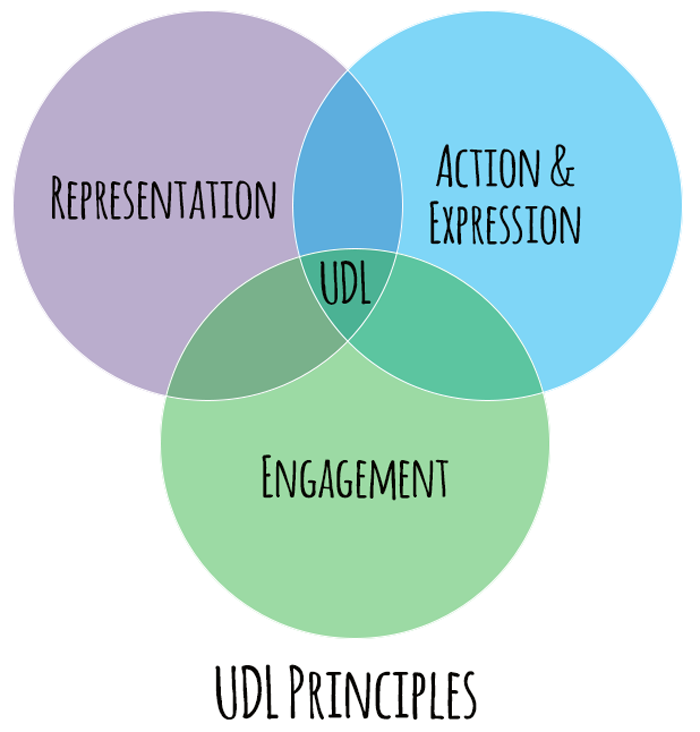
In the face of unexpected events, such as a pandemic, it is important to have a contingency plan in place to ensure that all learners, regardless of their individual needs, are still able to meet their educational needs. As an educator, I believe in the importance of having a flexible approach to learning and being able to adjust planned activities to meet the needs of all learners. In the case of a pandemic, where learners must remain at home, I would utilize interactive online resources that are designed with Universal Design for Learning (UDL) principles to ensure that all learners are able to access and engage with course material equally (Meyer et al., 2014). These resources would be tailored to meet the specific needs of different learner groups, such as visual, auditory, or kinesthetic learners, to ensure that all learners are able to fully engage with and understand the material. Additionally, I would provide additional training to learners who may be unfamiliar with online learning platforms and provide ongoing support to ensure that they are able to continue to do their jobs or complete their coursework effectively. My goal would be to ensure that all learners are able to continue their educational journey and achieve their goals, regardless of unexpected events, and to ensure that equality and support are provided for all people learning online, as exemplified by the “fair isn’t always equal” model (Meyer et al., 2014). By adopting a “fair isn’t always equal” approach, educators can ensure that all learners are provided with the support they need to succeed, rather than assuming that everyone has the same needs and provide the same support to everyone. This can help to promote equality and reduce barriers to learning, ensuring that all learners can achieve their goals. 

From my Blueprint, one potential barrier to student success with this activity could be a lack of prior knowledge or understanding of the concept of opportunity cost. If students are not familiar with the term or the idea of weighing the costs and benefits of different options, they may struggle to fully engage with the discussion and analysis. To reduce this barrier, the educator could provide a brief overview or definition of opportunity cost at the start of the activity, and provide additional examples or resources for students to review if needed.


Reference

Meyer, Anne, et al. Universal Design for Learning: Theory and Practice. CAST Professional Publishing, an Imprint of CAST, Inc., 2014, UDL Theory Practice, retrieved from: udltheorypractice.cast.org/

The bandaid lesson. simply powerful!: Teaching social skills, elementary counseling, beginning of school. Pinterest. (2017, August 1). Retrieved March 5, 2023, from https://www.pinterest.com/pin/664140276270420667/ 

Universal Design for Learning. CSA Education. (2022, July 19). Retrieved March 5, 2023, from https://csaedu.com/communications/universal-design-for-learning/ 

Blog 2

Cooperative Learning

A Simple Bully Buster: Cooperative Learning
A Simple Bully-Buster: Cooperative Learning. Greater Good.

Cooperative learning is an approach to learning environments that emphasizes working together in small groups to achieve common goals. The main characteristic of cooperative learning is that it promotes teamwork, collaboration, and mutual support among students. The topic that I choose is “Economics in Life”. In cooperative learning, students are divided into groups and work together to complete tasks, solve problems, or achieve specific learning objectives. In the context of economics in our daily life, cooperative learning can be used to help young people understand the concepts of supply and demand, budgeting, and saving. Cooperative learning imparts learning through positive interdependence, individual accountability, face-to-face interaction, interpersonal skills, and reflection (Johnson & Johnson 1994).  

One key aspect of cooperative learning is that it instills the value of interdependence among students, as well as the importance of mutual support in reaching shared objectives (Johnson&Johnson 2018). In economics, interdependence is an essential concept that refers to the way in which the actions of one person can affect others and vice versa. One economic example of interdependence is a farmer and a grocer. The farmer grows the crops and sells them to the grocer, who then sells the crops to the customers. The success of the grocer is dependent on the farmer’s ability to grow quality crops, and the farmer’s success is dependent on the grocer’s ability to sell the crops. In a cooperative learning setting, students develop the skills to collaborate effectively and understand the significance of considering the needs and perspectives of others, as they work towards their shared goals.

Moreover, cooperative learning can also help students understand the importance of teamwork and collaboration in achieving success. In the context of economics, this means learning how to work with others in the economy, such as consumers, and producers to achieve common goals and find solutions to complex economic problems. This helps students to appreciate the interconnectedness of the economy and to recognize that their own success is interdependent with the success of others. The key components of successful cooperative learning are “Positive Interdependence, Individual and Group Accountabilit, Promotive Interaction, Interpersonal Skills, Group Processing” (Johnson & Johnson 2009).

Cooperative learning is a useful approach for teaching economics in our daily life because it allows students to practice decision-making and problem-solving skills in a real-world context. It also helps students understand the interdependence of economic actors and the impact that their decisions can have on others in the economy. Furthermore, cooperative learning can lead to a more engaging and enjoyable learning experience for students, as they are able to work with their peers and apply what they have learned to real-world situations. Overall, incorporating cooperative learning in the teaching of economics in daily life can have a positive impact on student’s learning outcomes and help prepare them for success in the future.


Examples:

  • Students could work together in groups to create a budget for a hypothetical household, taking into account different sources of income and expenses. They could also work together to simulate a market, taking on different roles as producers and consumers and making decisions based on the principles of supply and demand.
  • Having students work together to research and present information about a current economic issue, such as inflation or the stock market. By working in groups, students can learn from each other and share different perspectives, allowing them to gain a deeper understanding of the topic.


[Youtube] Cooperative learning model: Strategies & Examples.

Why cooperative learning?

How to group students

Class example

Danger and cautions

Reference

Berkeley Greater Good Science Center. (n.d.). A Simple Bully-Buster: Cooperative Learning. Greater Good. Retrieved from https://greatergood.berkeley.edu/article/item/a_simple_bully_buster_cooperative_learning

Johnson, D. W., & Johnson, R. T. (2009). An Educational Psychology Success Story: Social Interdependence Theory and Cooperative Learning. Educational Researcher, 38(5), 365–379. Retrieved from JSTOR.

Johnson, D. W., & Johnson, R. T. (2018). Characteristics of Cooperative Learning. In Cooperative Learning in Education and Training. InTechOpen. https://doi.org/10.5772/intechopen.81086

Northern Illinois University’s Center for Innovation in Teaching and Learning. (n.d.). Cooperative Learning. Retrieved from https://www.niu.edu/citl/resources/guides/instructional-guide/cooperative-learning.shtml#:~:text=Cooperative%20learning%20imparts%20learning%20through,Johnson%20and%20Johnson%20(1994).

YouTube. (2017, Oct 5). Cooperative learning model: Strategies & Examples. [Video]. URL: https://www.youtube.com/watch?v=cnkKHL_dyGE

Blog 1

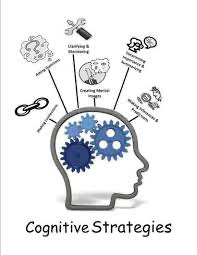
According to Ertmer and Newby (2013), “Cognitive theories focus on the conceptualization of students’ learning processes and address the issues of how information is received, organized, stored, and retrieved by the mind” (p.7). I remembered in a lab class I once took, the instructor explained to the class real-world problems related to the topic, such as the conditions under which an egg would have elastic properties. Next, the instructor instructed us to participate in a hands-on lab experiment to explore the effects of calcium carbonate and white vinegar on eggs. This activity applied the concepts I had learned to real-world problems and allowed me to see the impact of the information I had gained. The materials needed for this experiment were eggs, a container, and white vinegar. As I recall, the teacher placed the eggs into the container, poured the white vinegar back into the container, and then observed the bubbles around the eggs. This process takes about 24 hours before the eggs are fished out and cleaned up. At this point the eggs are elastic. I recalled the teacher’s experiment pattern from the classroom to do my own experiment at home. I started to read online and in the textbook to understand the reason for the experiment. I did not do it successfully because I did not completely submerge the egg in white vinegar. The next day I continued to listen to the teacher’s experiment. I realized that white vinegar reacts with calcium carbonate, the main ingredient in eggshells, to produce carbon dioxide, the bubbles you see on the surface of eggshells. Carbon dioxide is also the gas that we exhale when we breathe. Cognitive learning theory can improve my understanding when trying new subjects or tasks. In cognitive learning, I can gain a deeper and more comprehensive understanding of new material through a hands-on approach.

Theories of Learning Job Aid
  • An example of behaviorism could be that if a student gets 100% on a computational test, I give them a small reward. After that students study hard for their test in order to get the reward.
  • Cognitivism could be that I stimulate the students’ thinking potential through interactive activities in the classroom. I help students find new ways to solve problems.
  • In constructivism, students are urged to actively participate in the learning process. My role is to facilitate and help students to develop and assess their understanding.


Reference

Caruso, S. J. (Ed.). Instructional strategies for cognitive strategy instruction [Blog post]. Retrieved from https://hrdevelopmentinfo.com/instructional-strategies-for-cognitive-strategy-instruction/

Ertmer, P. A., & Newby, T. J. (2013). Behaviorism, cognitivism, constructivism: Comparing critical features from an instructional design perspective. Performance Improvement Quarterly, 26(2), 43-71.

https://sites.google.com/site/theoriesoflearning/

Welcome and Introduction

Hello everyone! Welcome to my blog. My name is Catherine, and I’m from China. I am majoring in Economics, this is my 4th year at the University of Victoria. I like photography because I can always recall back that joyful moment by looking at the photos. I especially like portrait photography, architecture photography, and street photography. I’ve been studying in Canada for a couple of years. I am looking forward to learning about the network and building a personal platform. Hopefully, we all have a wonderful term!!