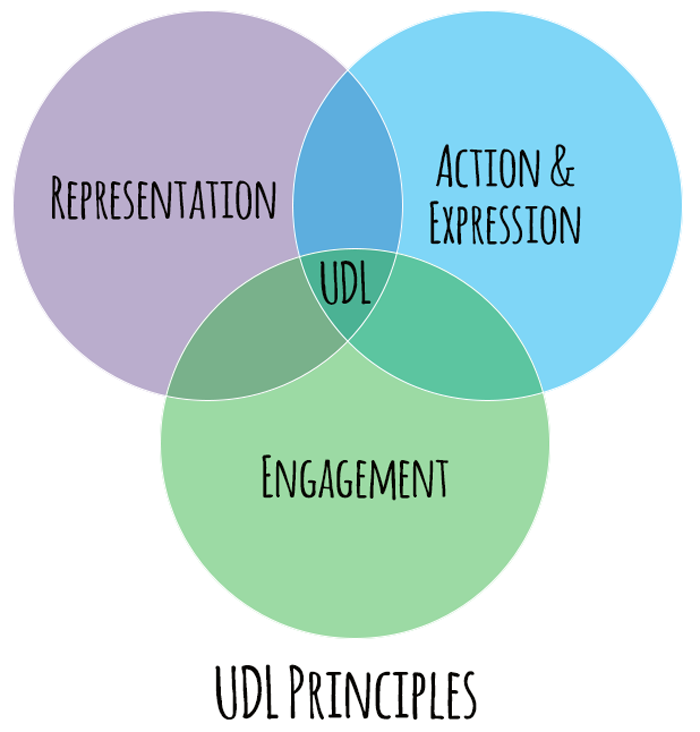
In the face of unexpected events, such as a pandemic, it is important to have a contingency plan in place to ensure that all learners, regardless of their individual needs, are still able to meet their educational needs. As an educator, I believe in the importance of having a flexible approach to learning and being able to adjust planned activities to meet the needs of all learners. In the case of a pandemic, where learners must remain at home, I would utilize interactive online resources that are designed with Universal Design for Learning (UDL) principles to ensure that all learners are able to access and engage with course material equally (Meyer et al., 2014). These resources would be tailored to meet the specific needs of different learner groups, such as visual, auditory, or kinesthetic learners, to ensure that all learners are able to fully engage with and understand the material. Additionally, I would provide additional training to learners who may be unfamiliar with online learning platforms and provide ongoing support to ensure that they are able to continue to do their jobs or complete their coursework effectively. My goal would be to ensure that all learners are able to continue their educational journey and achieve their goals, regardless of unexpected events, and to ensure that equality and support are provided for all people learning online, as exemplified by the “fair isn’t always equal” model (Meyer et al., 2014). By adopting a “fair isn’t always equal” approach, educators can ensure that all learners are provided with the support they need to succeed, rather than assuming that everyone has the same needs and provide the same support to everyone. This can help to promote equality and reduce barriers to learning, ensuring that all learners can achieve their goals.

From my Blueprint, one potential barrier to student success with this activity could be a lack of prior knowledge or understanding of the concept of opportunity cost. If students are not familiar with the term or the idea of weighing the costs and benefits of different options, they may struggle to fully engage with the discussion and analysis. To reduce this barrier, the educator could provide a brief overview or definition of opportunity cost at the start of the activity, and provide additional examples or resources for students to review if needed.
Reference
Meyer, Anne, et al. Universal Design for Learning: Theory and Practice. CAST Professional Publishing, an Imprint of CAST, Inc., 2014, UDL Theory Practice, retrieved from: udltheorypractice.cast.org/
The bandaid lesson. simply powerful!: Teaching social skills, elementary counseling, beginning of school. Pinterest. (2017, August 1). Retrieved March 5, 2023, from https://www.pinterest.com/pin/664140276270420667/
Universal Design for Learning. CSA Education. (2022, July 19). Retrieved March 5, 2023, from https://csaedu.com/communications/universal-design-for-learning/
Hi Catherine,
Your blog highlights the importance of developing contingency plans to ensure that all learners have their educational needs met, utilizing online resources designed with Universal Design for Learning principles to ensure equal access, providing additional training and support for learners, and taking a “fair isn’t always equal” approach to promoting equity and reducing barriers to learning. I believe this approach is feasible, especially for students who have barriers to accessing educational resources and technology, and that ensuring relative equity can help enhance overall learning.
Hi Catherine,
Thanks for sharing your ideas. I read that you used our blueprint for analysis and examples and I couldn’t agree more with your solution.
Since the receivers are not at the same level of basic, so in order to minimize the differences, we can really organize the concepts that are unfamiliar or difficult to understand so that the learners can always review them. This is the most important point in designing a learning program in my opinion.
Hi Catherine. Interestingly you mentioned that your resources will be “tailored to meet the specific needs of different learner groups, such as visual, auditory, or kinesthetic learners.” In a couple of weeks, we will discuss some educational research myths so that you might change your opinion on learning styles. In short, it is essential to focus on specific learning goals and the best strategies to help learners achieve them, not on learning styles. For example, if we want someone to learn how to ride a bike, it does not matter what type of learner they are. We have to apply strategies that would support kinesthetic learning through physical activity.
Thank you very much for your reply and shared information. That means learning how to swim, learning how to play a musical instrument, etc. In these cases, the learner’s learning style is not the key factor, but rather the need to design and provide appropriate strategies and support to help them learn through practice and physical activity. These strategies can include simulating real situations, providing hands-on opportunities, providing timely feedback, etc., to help learners acquire the required skills and knowledge. That’s what I understand.