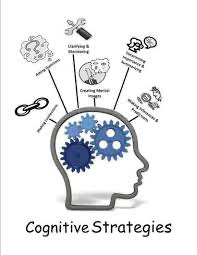
According to Ertmer and Newby (2013), “Cognitive theories focus on the conceptualization of students’ learning processes and address the issues of how information is received, organized, stored, and retrieved by the mind” (p.7). I remembered in a lab class I once took, the instructor explained to the class real-world problems related to the topic, such as the conditions under which an egg would have elastic properties. Next, the instructor instructed us to participate in a hands-on lab experiment to explore the effects of calcium carbonate and white vinegar on eggs. This activity applied the concepts I had learned to real-world problems and allowed me to see the impact of the information I had gained. The materials needed for this experiment were eggs, a container, and white vinegar. As I recall, the teacher placed the eggs into the container, poured the white vinegar back into the container, and then observed the bubbles around the eggs. This process takes about 24 hours before the eggs are fished out and cleaned up. At this point the eggs are elastic. I recalled the teacher’s experiment pattern from the classroom to do my own experiment at home. I started to read online and in the textbook to understand the reason for the experiment. I did not do it successfully because I did not completely submerge the egg in white vinegar. The next day I continued to listen to the teacher’s experiment. I realized that white vinegar reacts with calcium carbonate, the main ingredient in eggshells, to produce carbon dioxide, the bubbles you see on the surface of eggshells. Carbon dioxide is also the gas that we exhale when we breathe. Cognitive learning theory can improve my understanding when trying new subjects or tasks. In cognitive learning, I can gain a deeper and more comprehensive understanding of new material through a hands-on approach.

- An example of behaviorism could be that if a student gets 100% on a computational test, I give them a small reward. After that students study hard for their test in order to get the reward.
- Cognitivism could be that I stimulate the students’ thinking potential through interactive activities in the classroom. I help students find new ways to solve problems.
- In constructivism, students are urged to actively participate in the learning process. My role is to facilitate and help students to develop and assess their understanding.
Reference
Caruso, S. J. (Ed.). Instructional strategies for cognitive strategy instruction [Blog post]. Retrieved from https://hrdevelopmentinfo.com/instructional-strategies-for-cognitive-strategy-instruction/
Ertmer, P. A., & Newby, T. J. (2013). Behaviorism, cognitivism, constructivism: Comparing critical features from an instructional design perspective. Performance Improvement Quarterly, 26(2), 43-71.
Recent Comments